

THE QUICK ANSWER
What do you need to get started?
Choose a service, research your local market, estimate startup costs, check registration and insurance requirements, buy essential supplies, and start marketing to a specific customer group.
Planning estimate: A lean, owner-operated setup might require several hundred to a few thousand dollars, depending on existing equipment, transportation, insurance, and local fees. A staffed operation usually needs a larger budget.
1. Decide What Type of Cleaning Business to Start
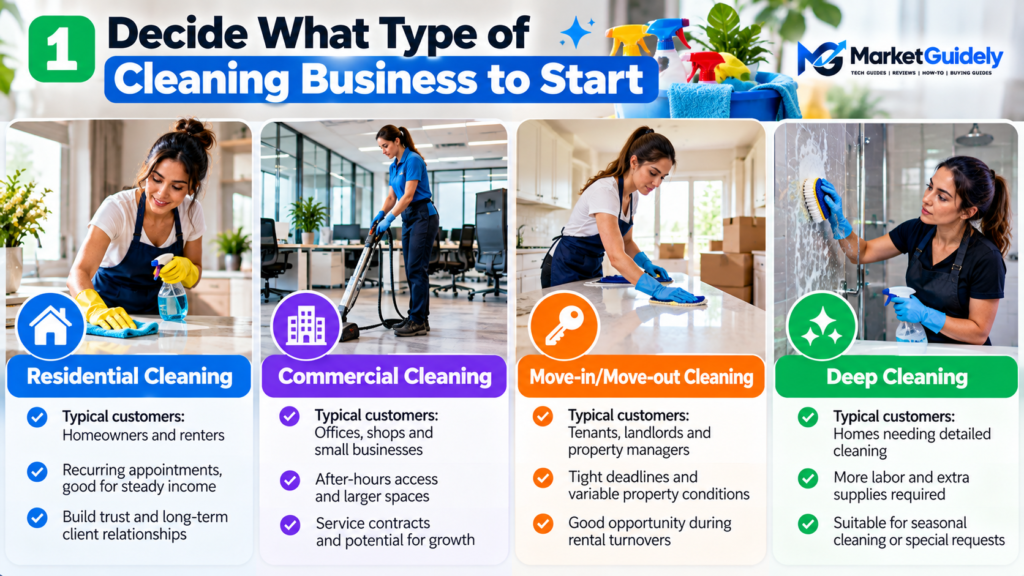
Before buying supplies, decide exactly what you will clean. Trying to offer every possible service from the beginning can make it harder to price jobs accurately and explain your business to potential customers.
| Business type | Typical customers | What to consider |
|---|---|---|
| Residential cleaning | Homeowners and renters | Recurring appointments, travel time and trust |
| Commercial cleaning | Offices, shops and small businesses | After-hours access, contracts and staffing |
| Move-in/move-out cleaning | Tenants, landlords and property managers | Tight deadlines and variable property conditions |
| Deep cleaning | Homes needing detailed cleaning | More labor, extra supplies and clear scope |
A practical starting point: If you are working alone, residential maintenance cleaning may be easier to test than a large commercial contract. You can learn how long jobs take, improve your checklist, and ask satisfied clients about recurring visits before hiring staff.
2. How Much Does It Cost to Start a Cleaning Business?
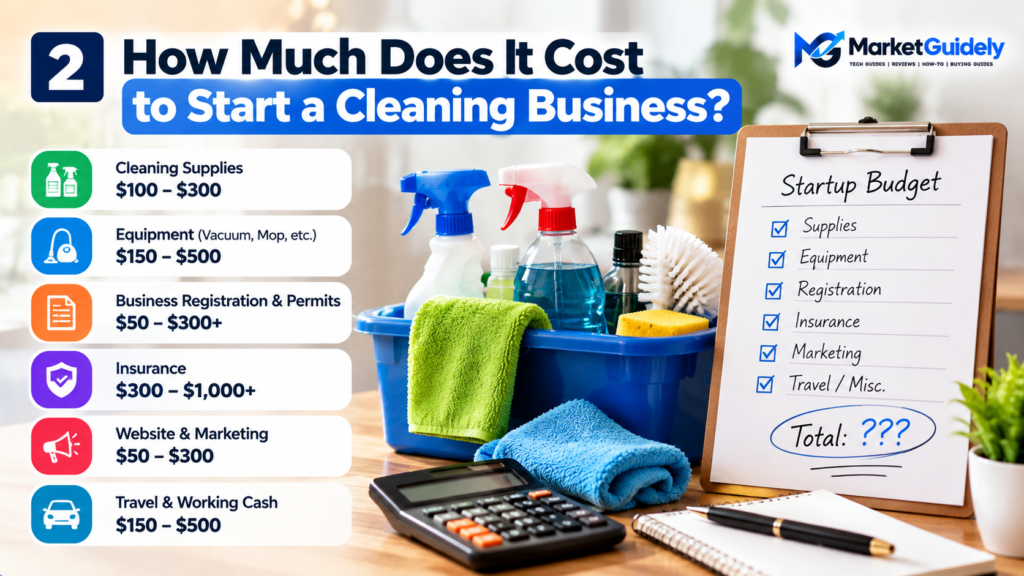
There is no single startup cost for every cleaning company. Someone who already owns a reliable vehicle and basic equipment has different needs from an owner who must purchase everything and hire workers.
The following figures are illustrative planning allowances, not national price averages or vendor quotes. Get current local estimates before committing money.
| Expense | Illustrative budget | Why it matters |
|---|---|---|
| Basic cleaning supplies | $100–$300 | Everyday cleaning products and tools |
| Vacuum and equipment | $150–$500 | Depends on equipment already owned |
| Business registration and permits | $50–$300+ | Varies by state, city and structure |
| Insurance allowance | $300–$1,000+ | Actual premiums depend on coverage and risk |
| Website and marketing | $50–$300 | Basic online presence and local promotion |
| Initial travel and working cash | $150–$500 | Fuel, replenishment and unexpected expenses |
These categories can overlap with existing resources, and the amounts are not a guarantee of what you will pay. Registration, insurance and equipment can cost more than the example allowances. A vehicle purchase, employee payroll, commercial equipment or office rent would increase the budget significantly.
Example: A lean solo setup
Suppose you already have a suitable vehicle and want to begin with residential cleaning. You budget $250 for supplies, $350 for equipment, $500 for insurance, $150 for marketing, and $250 for registration and other initial expenses.
Illustrative initial budget
$1,500
This is a sample calculation, not a promise that every cleaning business can launch for this amount. It excludes a new vehicle, personal living expenses, payroll and any unusually high local costs.
The useful lesson is to prepare your own itemized budget rather than borrowing someone else’s startup figure. The U.S. Small Business Administration explains that startup expenses vary by location and can include equipment, permits, insurance, marketing and professional services.
Review the SBA’s business-planning guidance before finalizing your numbers.
3. Choose a Business Name and Handle the Legal Basics
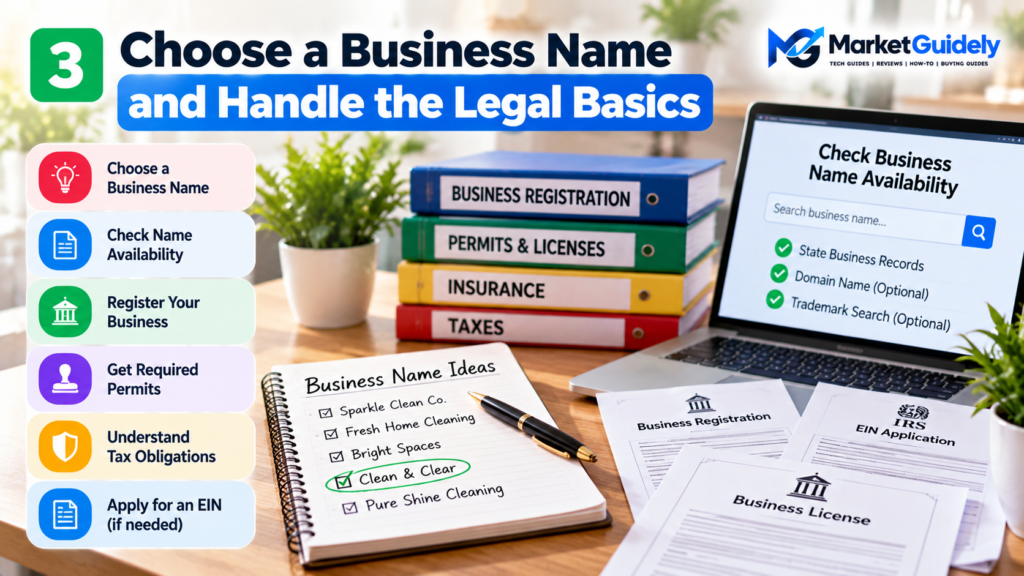
A professional name should be easy to remember, simple to spell and broad enough to accommodate future services. Before printing uniforms or buying a domain, check whether the name is already in use and review the relevant state business records.
Your next steps will depend on where you operate and how you structure the company.
- Choose a structure: Compare operating as a sole proprietor with forming an LLC or another entity. Each option has different liability, tax and administrative consequences.
- Check registration rules: Review state, county and city requirements, including any trade-name registration.
- Check permits: Ask local authorities whether your specific cleaning services require permits or additional approvals.
- Understand taxes: Set up a recordkeeping process and check federal, state and local tax obligations.
- Consider an EIN: An Employer Identification Number may be required depending on your structure and circumstances. Apply through the official IRS website; an EIN is free directly from the IRS.
Do not assume every state has the same rules. A basic home-cleaning service may face different requirements from a company handling specialized chemicals or providing regulated services.
Useful official resources:
4. Understand Insurance Before Entering a Customer’s Property

Cleaning professionals work around furniture, flooring, electronics, personal belongings and sometimes keys or access codes. A small accident can become expensive if the business has no appropriate protection.
Ask a licensed insurance professional about coverage suitable for your business. Depending on your services, location and staffing, you may need to consider:
- General liability insurance: May help cover certain third-party bodily injury or property-damage claims, subject to the policy.
- Commercial auto insurance: May be appropriate when a vehicle is used for business activities.
- Workers’ compensation: Requirements depend on state law and your workforce.
- Employee dishonesty or bonding options: Some customers may ask about these, but they are not identical to general liability coverage.
Ask for the policy limits, exclusions, deductibles and exact activities covered. Do not advertise that your company is bonded or insured unless the statement is accurate and you can support it.
5. Buy Essential Cleaning Supplies First
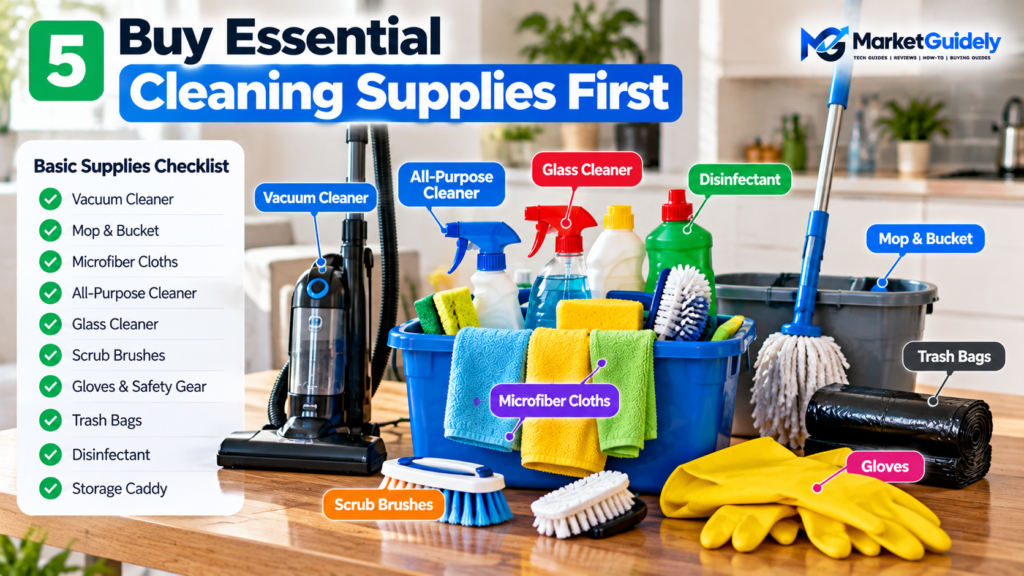
It is tempting to buy professional machines and a large collection of products before your first booking. That can tie up money you may need for insurance, fuel or marketing.
Start with the tools required for the specific services you offer, then add equipment when paying jobs justify the expense.
Cleaning tools
- Suitable vacuum
- Mop and bucket
- Microfiber cloths
- Scrub brushes
- Extendable duster
Products and protection
- Surface-appropriate cleaners
- Glass cleaner
- Gloves and eye protection
- Clearly labeled containers
- Waste bags
Read product labels, follow dilution instructions and never mix cleaning chemicals unless the manufacturer explicitly says it is safe. In particular, mixing bleach with ammonia or acids can release dangerous gases. Store products securely and keep them away from children and pets.
Before accepting a job, clarify whether the customer expects you to supply the products or use items already at the property. That detail can affect both your costs and the time needed to complete the work.
6. Set Prices That Cover More Than Cleaning Time
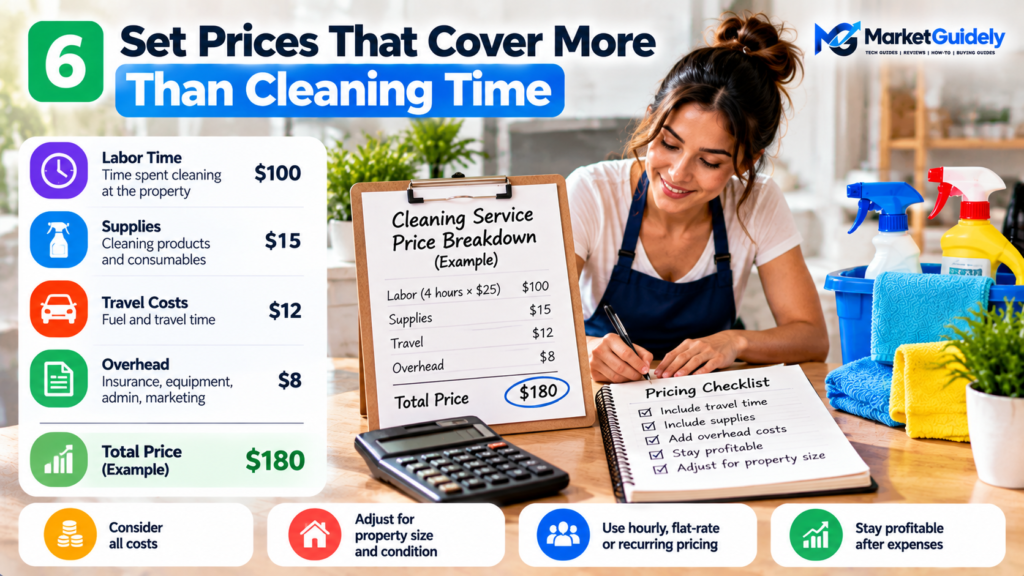
One common pricing mistake is charging only for the hours spent inside a property. A cleaning business also has travel, setup, laundry, supplies, quoting, scheduling, insurance, taxes and unpaid time between appointments.
There are three common pricing approaches:
- Hourly pricing: Useful when the scope or condition is uncertain, provided you explain the expected time and rate.
- Flat-rate pricing: Gives customers a clear quote when the property and task list are well understood.
- Recurring-service pricing: Can work for regular weekly or biweekly visits when the scope and schedule are consistent.
A simple pricing example
Imagine a customer accepts a $180 cleaning quote. For planning purposes, assume the job uses four hours of labor valued internally at $25 per hour, $15 in supplies, $12 in travel, and $8 in allocated overhead.
| Customer payment | $180 |
| Labor allowance (4 × $25) | −$100 |
| Supplies | −$15 |
| Travel | −$12 |
| Allocated overhead | −$8 |
| Remaining amount | $45 |
The $45 remaining is not automatically the owner’s take-home profit. The example may exclude payment-processing fees, taxes, rework, cancellations and other expenses. For a solo owner, the labor allowance is a planning cost for time spent working, not necessarily a cash wage paid to someone else.
Use your actual local costs and the time required for each property to refine your quotes. A large home with pets, heavy buildup or special requests should not automatically receive the same price as a smaller routine cleaning.
7. Find Your First Cleaning Customers
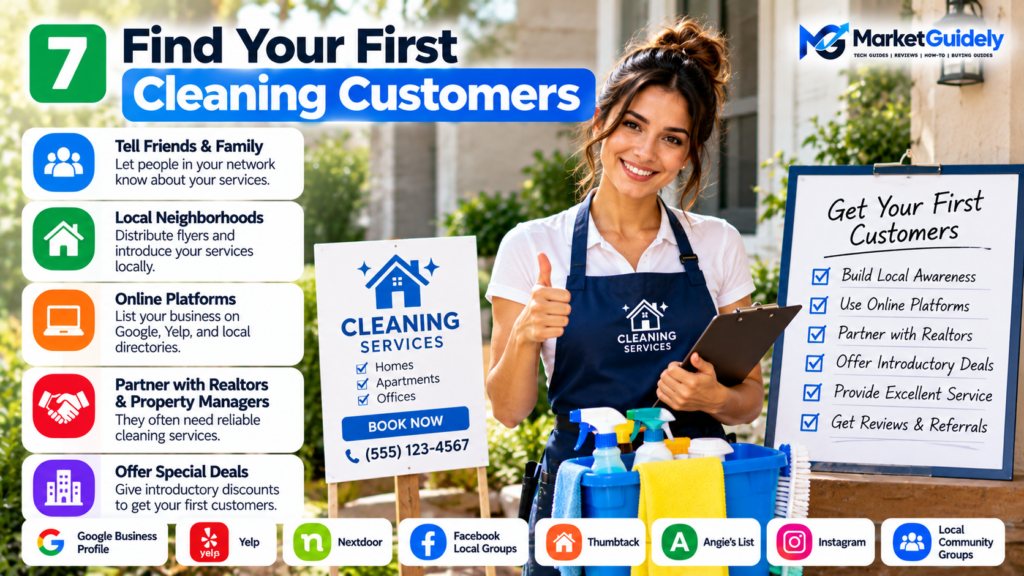
You do not need a huge marketing budget to start testing demand. You do need to make it easy for potential customers to understand what you do, where you work and how to request a quote.
Build a simple local presence
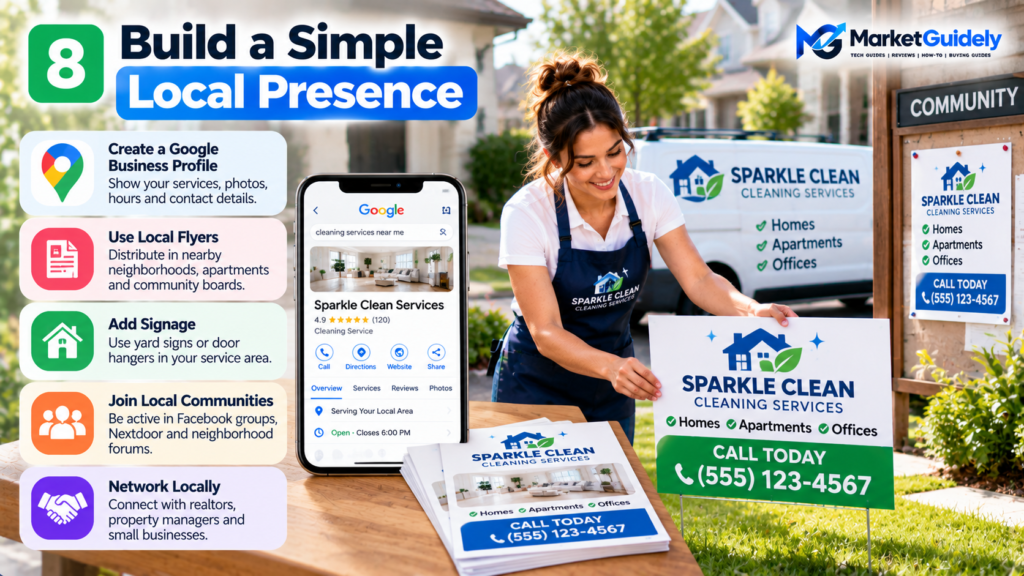
- Create a professional website: Include your service area, service descriptions, quote-request details and clear contact information.
- Set up a Google Business Profile if eligible: Follow Google’s rules for service-area businesses and use accurate business details.
- Ask for genuine reviews: Request honest feedback from real customers after completed jobs. Never buy reviews or offer misleading incentives.
- Use local community channels appropriately: Share useful information and respond to requests without spamming groups.
- Build referral relationships: Property managers, real estate professionals and landlords may be relevant contacts, depending on your service.
Photos can help communicate the quality of your work, but use them honestly. Obtain permission before publishing images taken inside a customer’s home, and avoid showing personal documents, family photos, addresses or other private details.
A practical first-month plan

Week 1 — Validate the service
Choose one target customer group, research competing local services and estimate your costs.
Week 2 — Prepare the business
Check local rules, organize insurance, buy essential supplies and create a written cleaning checklist.
Week 3 — Start outreach
Publish your service details, contact appropriate local prospects and respond promptly to quote requests.
Week 4 — Review the numbers
Track leads, bookings, job duration, expenses and customer feedback. Adjust your service scope and pricing based on evidence.
This is a planning framework, not a guarantee of obtaining customers within 30 days. Local demand, competition, pricing, availability and marketing quality all affect results.
8. How to Turn One-Time Jobs Into Repeat Business
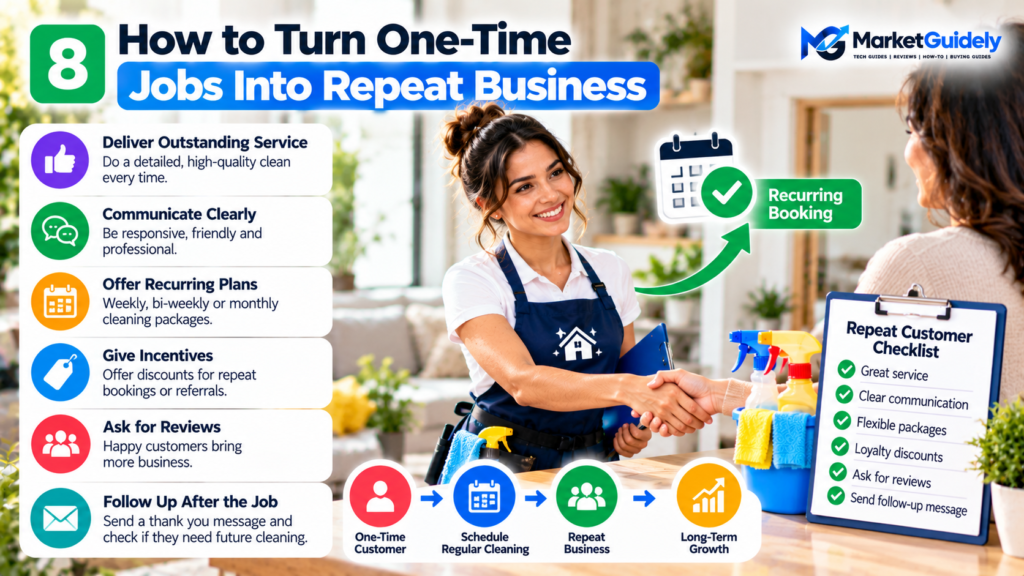
Finding a customer is only part of the job. A well-run cleaning company also needs consistent service, clear communication and reliable scheduling.
- Confirm the service scope and price before the appointment.
- Send reminders and communicate delays early.
- Use a checklist so important tasks are not forgotten.
- Ask customers to identify any concerns before you leave, when practical.
- Keep records of payments, supplies, travel and job duration.
- Follow up professionally and offer recurring appointments when they suit the customer.
Do not promise that every stain can be removed or every surface can be restored. Explain limitations before starting work, particularly when dealing with delicate finishes or unknown materials.
9. Mistakes to Avoid When Starting a Cleaning Business
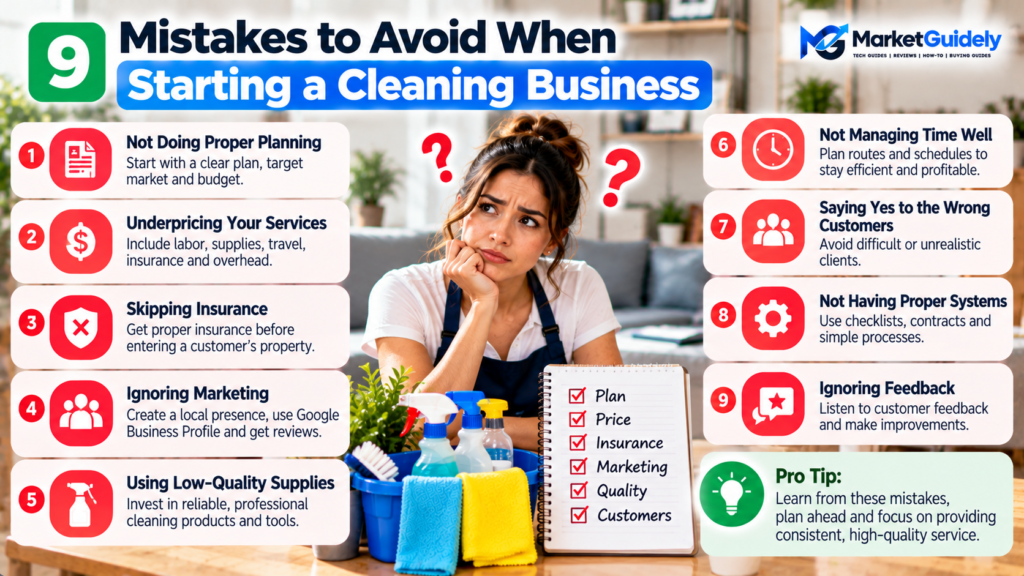
- Underpricing jobs: Include travel, supplies, admin time and overhead when working out your rates.
- Buying too much equipment: Start with essential tools and upgrade when demand supports the purchase.
- Ignoring local rules: Verify registration, permits, taxes and insurance requirements for your location.
- Accepting vague requests: Define what is included and what costs extra before confirming the booking.
- Depending on one customer source: Build a mix of referrals, repeat clients and appropriate local marketing.
- Mixing business and personal money: Keep accurate records and consider a dedicated business bank account.
- Hiring before the numbers work: Understand labor costs, payroll responsibilities and applicable employment rules before taking on staff.
10. Startup Checklist: Are You Ready?
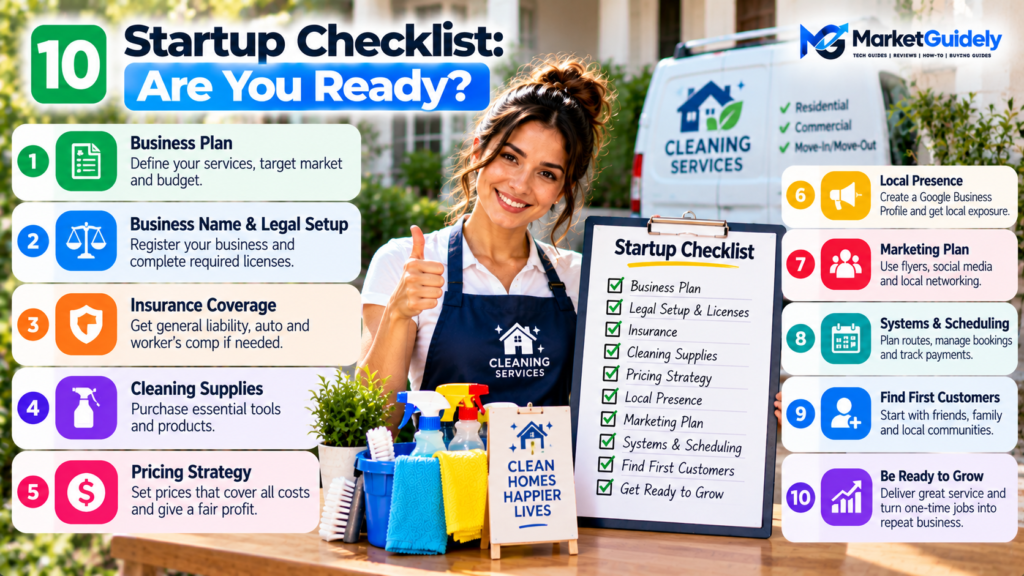
Use this checklist to identify what remains before you accept your first paid booking.
Checking these boxes does not replace local legal advice or required registrations. It simply helps you identify the practical tasks that need attention.
Frequently Asked Questions
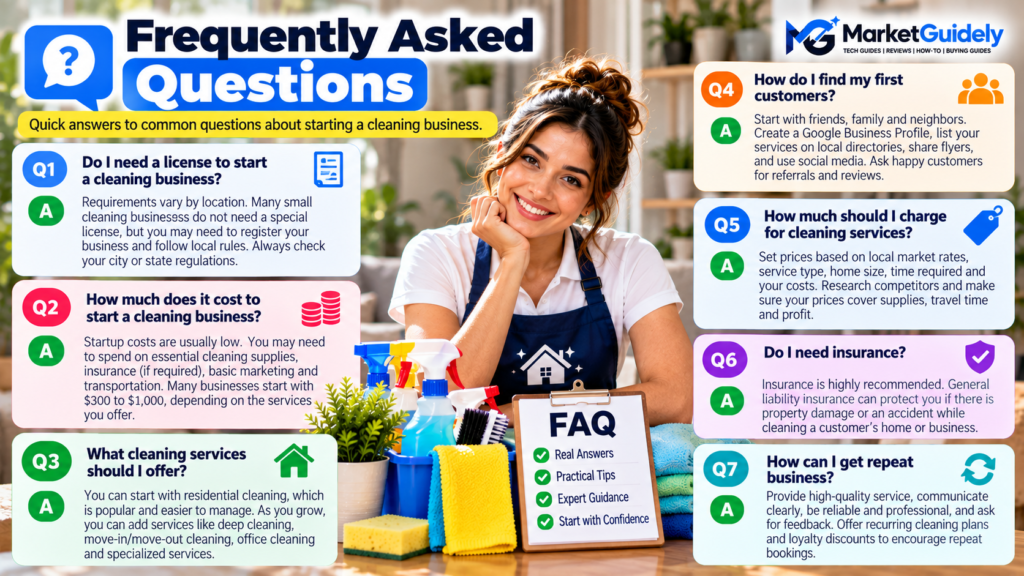
How much money do you need to start a cleaning business?
The amount depends on your equipment, location, insurance, transportation and whether you hire workers. A lean solo setup may be possible with several hundred to a few thousand dollars, but prepare a local, itemized budget before starting.
Do you need a license to start a cleaning business in the USA?
Requirements vary by state, county, city and service type. Check official local and state government resources to determine which registrations, licenses or permits apply to your business.
Is an LLC required for a cleaning business?
Not universally. Some owners operate as sole proprietors, while others form an LLC or another entity. Compare liability, tax and administrative implications with a qualified professional before deciding.
Do cleaning businesses need insurance?
Appropriate coverage can help manage risks involving property damage, injuries and business vehicles. Legal requirements depend on your location and workforce, so review your situation with an insurance professional.
How should a new cleaning business price its services?
Estimate labor time, supplies, travel, overhead and other expenses. Compare local competitors for context, then quote according to the property’s condition and agreed scope instead of copying another company’s price.
How can a new cleaning business get customers without a large advertising budget?
Start with a clear local service offering, referrals, genuine customer reviews, an eligible business profile and a simple website. Track which channels generate real inquiries and paying customers before increasing marketing spend.
Can you run a cleaning business from home?
It may be possible, depending on local zoning, business rules, lease terms and how the business operates. Check applicable requirements before storing supplies, receiving employees or customers, or using your home as a business base.
Final Thoughts
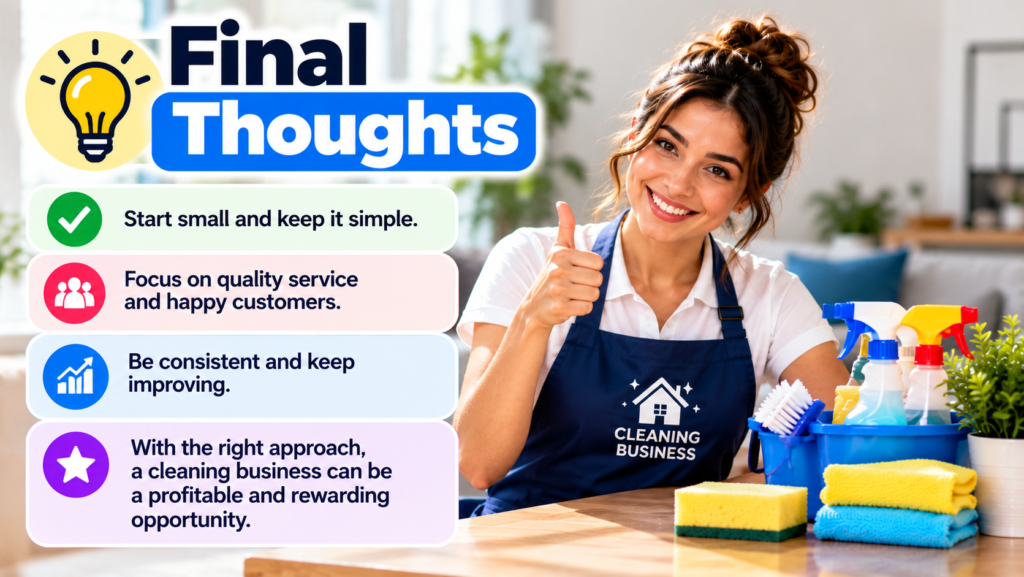
A successful cleaning business is built on more than good equipment. It depends on choosing a service people need, quoting jobs carefully, protecting the business against avoidable risks and delivering consistent work.
You do not have to build a large company immediately. Start with a clear service, understand the local requirements, keep your initial expenses under control and measure the results of each job. Once you know which customers and services make financial sense, you can make more informed decisions about equipment, marketing and hiring.
Editorial note: This guide provides general educational information, not legal, tax, insurance or financial advice. Costs are illustrative planning estimates. Verify current requirements with official authorities and obtain quotes from relevant providers before making business decisions.
Sources and Further Reading

Author

marketguidely@gmail.com